
Macon County Civil Docket Searches
Broad civil and domestic cases in Macon County belong to the Superior Court. PeachCourt serves as its required e-filing system and the practical way to reach documents online. The Georgia E-Access directory names the provider for each court. It stops short of a unified statewide results screen, though. PeachCourt support describes two separate tools. Cases searches want the county, the court, and an exact case number. Filings searches want an exact Peach number. The public help pages neither promise a party-name search for Macon nor spell out local wildcard rules.
- Read the filing stamp or caption and identify Superior, Magistrate, Probate, or municipal court.
- For Superior Court, sign in to PeachCourt and choose Cases.
- Select Macon County and Superior Court, then enter the exact case number.
- Read parties and counsel before tracing service, motions, orders, settings, and judgment.
- Compare the latest signed order or setting with older calendar entries.
- Request any missing plain or certified item from the clerk that holds the file.
A blank result has several innocent explanations. The case may sit in a lower court. It may live in an older paper file, involve protected material, or fall into a vendor gap. For Superior Court matters, call Terresena H. Harp, Clerk of Superior Court, Macon County. Her number is 478-472-7661. Visit at 121 South Sumter Street, Oglethorpe, Georgia 31068. The office keeps Monday through Friday hours of 8:00 a.m. to 5:00 p.m.
Macon Civil Docket E-Filing
The Georgia Courts e-file directory identifies PeachCourt as mandatory for Macon Superior Court.
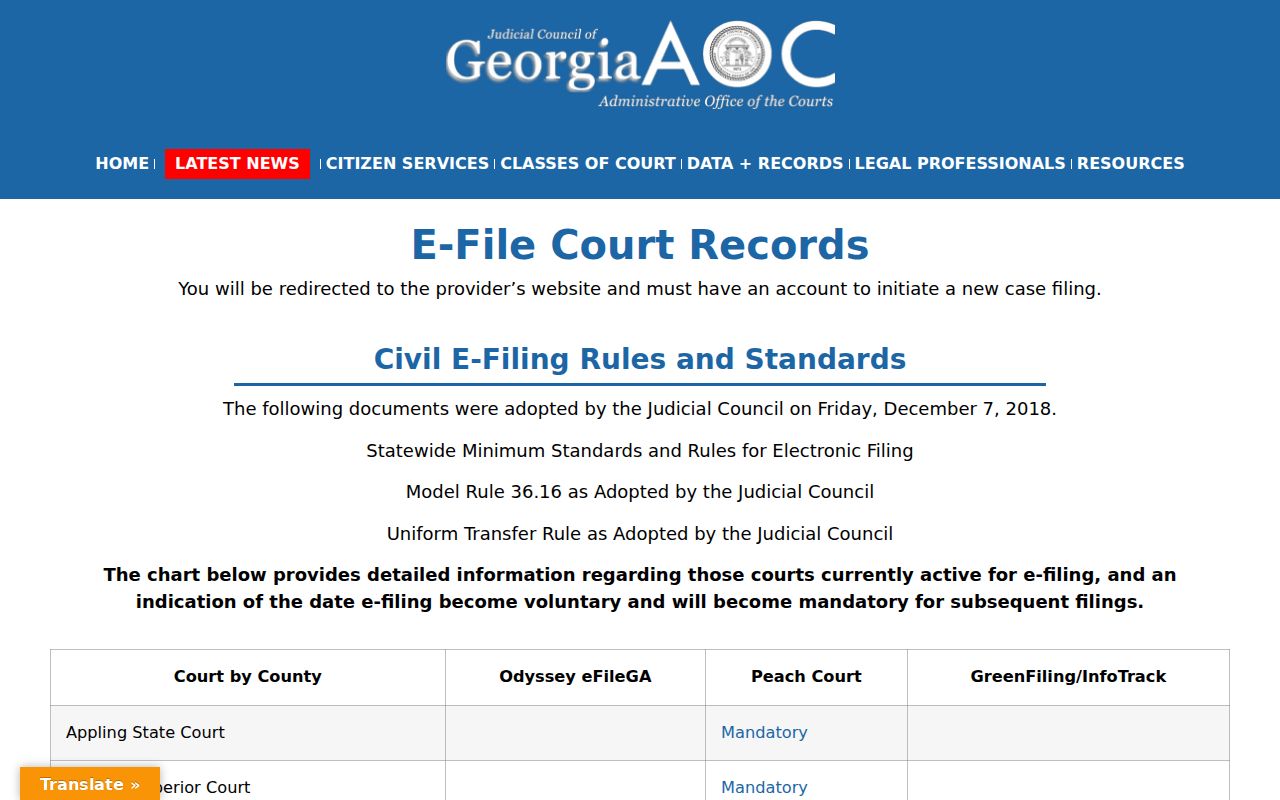
PeachCourt splits its tools into Cases and Filings, and each wants something exact. Enter the full court case number in Cases. Enter the full Peach number in Filings. Never borrow a case-number format from another Georgia county. Macon's public pattern has not been documented. If all you have is a party name, call the Superior Clerk and ask about a name search. Do not assume the account screen offers one. Small claims, garnishments, and other Magistrate filings take a different path. Macon County Magistrate Court lists 478-472-8509 and an nCourt service page. That page covers filing and payment choices, not a public docket search. Probate records stay with Probate Court. A municipal court handles city ordinance and traffic matters rather than a general county civil suit.
Civil Dockets: What They Show
A Macon County civil docket should open with the basics. Expect the court, case number, filing date, case style, judge, case type, status, and disposition. Party details come next. Look for plaintiffs or petitioners. Defendants or respondents, attorneys with bar numbers, or a self-represented flag may follow. The chronological register then walks through the life of the case. Complaint or petition, service, answer, motions, discovery or case-management orders, settings, hearings, trial, judgment, and post-judgment activity can all appear in order.
| Case number | The clerk's identifier; no verified Macon civil prefix or public format is available. |
|---|---|
| Parties | Plaintiff and defendant, or petitioner and respondent, plus counsel or self-represented status. |
| Filings | Complaint, petition, answer, service return, exhibits, notices, and other accepted papers. |
| Motions and orders | A request to the court and the separate judge's direction that rules on it. |
| Judgment | The formal result, disposition date, and possible post-judgment or appeal entries. |
Document links sit on a second access layer. A docket line can exist even when its image is unavailable. PeachCourt prices most images at $0.50 per page plus a convenience charge. Some access carries added vendor charges. Only the clerk, not the vendor, authenticates a certified copy.
Macon Civil Docket Versus File
Think of the docket as an index and timeline. The file holds the actual papers behind it. A row saying a motion was filed tells you nothing about whether the court granted it. The later order answers that question. A judgment row marks the outcome, while the signed judgment supplies the exact terms. A notice of setting can also linger on screen after a continuance moves the hearing. For quick tracking, note the latest status, the last event, the next setting, and the disposition. For proof, request the actual order, judgment, or certified docket. Financial data, sealed papers, protected identifiers, and exhibits are not guaranteed online. A broad request for "everything" often costs more than a focused one. Name an entry date and document instead.
What Cases Fill the Civil Docket
The Georgia Judicial Council reporting schema supplies useful civil vocabulary, though it is not a live Macon search form. The broad Superior civil and domestic categories include:
- contract, general tort, automobile tort, malpractice, and product-liability matters;
- real-property, possession, injunction, writ, habeas, and civil-appeal matters;
- restraining petitions, family-violence petitions, and other protective proceedings;
- divorce, separate maintenance, alimony, custody, support, paternity, legitimation, and adoption;
- garnishment, contempt, modification, post-judgment, and related actions.
Classification alone does not pick the filing office. Magistrate Court holds limited civil claims and garnishment-related work. Probate Court owns estate, guardianship, and other probate records. The official court tables list no current Macon State Court. Confirm the caption and the clerk before placing a case in a court that may not exist.
Service on Macon Civil Dockets
Service means the recorded delivery of required case papers. On a civil timeline, keep three dates apart. Note when the complaint was filed, when service issued and returned, and when the answer came in. Then track motions and each judge's orders as separate events. Never reduce a default-related entry to a search label. Read the signed order or judgment, and check for later relief, amendment, or appeal. Macon publishes no civil shorthand list. An abbreviation like DWOP may not carry the local meaning you assume without the full entry or clerk confirmation. Use plain dates and full descriptions. When an item stays unclear, ask the clerk for the docket line and its linked paper by entry date.
Hearings on the Civil Docket
A Macon civil setting entry usually lists a date, time, judge, courtroom, and setting type. For more, the Southwestern Judicial Circuit calendar page posts links to each judge's Macon civil calendar. The posted sheets show calendar-call fields, though the visible 2024 examples are history, not live schedules. An old sheet never proves a case is still set.
Trust the newest signed notice or order above all. Check it against PeachCourt and the current judge page. Phone the clerk if the two disagree. A continuance or reset changes everything. The circuit offers no searchable daily Macon calendar. It has no reminder tool and no posted remote-hearing policy. When you call, ask for the current date, courtroom, judge, and any new setting order.
Macon Civil Docket ADR Entries
The Southwestern Judicial Circuit lists alternative dispute resolution among its programs. Most people call it ADR. It gives parties a structured path to settle a civil dispute without a trial, and a Macon civil docket may reflect that path at several points. You might see a referral or order, a notice, a session entry, a report, or a later setting tied to the process. The program listing alone does not mean every Macon County civil case must take part. It also sets no universal local deadline. Read the actual order for your duties and dates. If the docket shows an ADR term but no paper is on file, ask the Superior Clerk for the order. Confirm your next court date separately.
Who Can See Civil Dockets
Civil dockets in Macon County Superior Court start open to the public. Still, the law or a valid court order can limit what anyone sees. Adoption material may be restricted or redacted. So may protected identifiers, sealed filings, and papers under a protective order. Rule 21 sets a formal process for closing access, weighing claimed harm against the public interest. Rule 21.6 covers personal identifiers.
Key Rules:
Uniform Superior Court Rule 21 states the public-access baseline and restriction process.
Rule 21.6 and O.C.G.A. 9-11-7.1 require proper handling of protected identifiers and information.
O.C.G.A. 50-18-71 guidance supports a focused request for existing records and does not require creation of a new report.
Going online is only one way to reach the Macon civil docket. You can also use PeachCourt. Visit the Superior Clerk in person, call 478-472-7661, or mail a specific written request. Ask whether the office keeps a public terminal. Macon publishes no terminal policy. Before you send anything, confirm the mail, fax, email, identification, fee, and delivery terms.
Macon Civil Docket Copy Requests
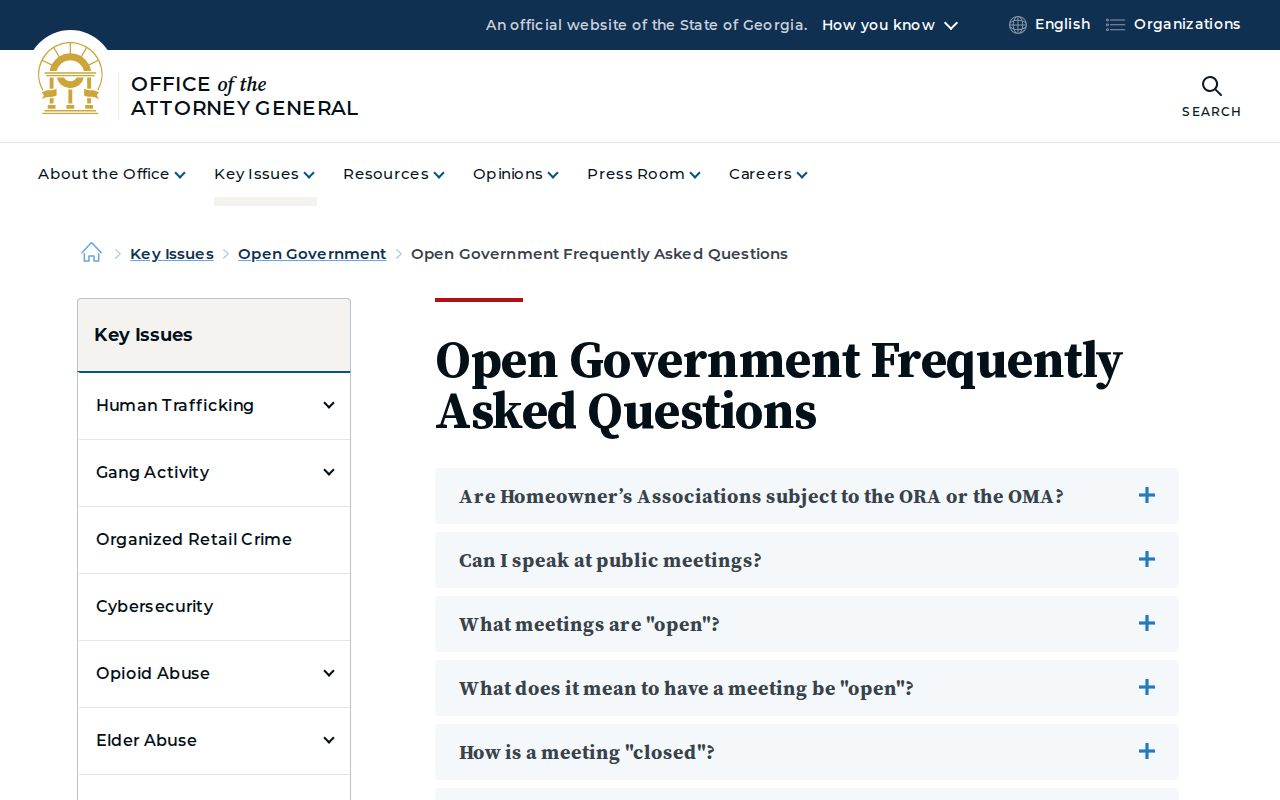
The Georgia Attorney General open-government FAQ lays out the fee, search-time, copy, and redaction principles that govern public records requests.
The clerk posts no fee sheet, fixed request form, or turnaround promise for certified copies. Call before you send money. Confirm the case number first. Then nail down the exact paper you need. Note the number of pages and whether you want a plain or certified copy. Ask which payment types the clerk accepts, how the copy will reach you, and what the fee will run. State guidance sets a useful ceiling here. Georgia treats 25 cents per page as the usual maximum for public-record copies, and a court may charge for search or retrieval time after the first 15 minutes. Certified-copy pricing in Macon County still comes down to the clerk. Get the number from that office directly. Know which office holds the file, too. A Magistrate case belongs to that court, not the Superior Clerk. Probate records sit with Probate Court, and a municipal clerk keeps city records. A written request citing the Georgia Open Records Act can help you get a precise answer, as long as you ask for an existing docket or paper rather than a custom summary.